
More Than an Arrow: Why Wayfinding Is a Safety Strategy

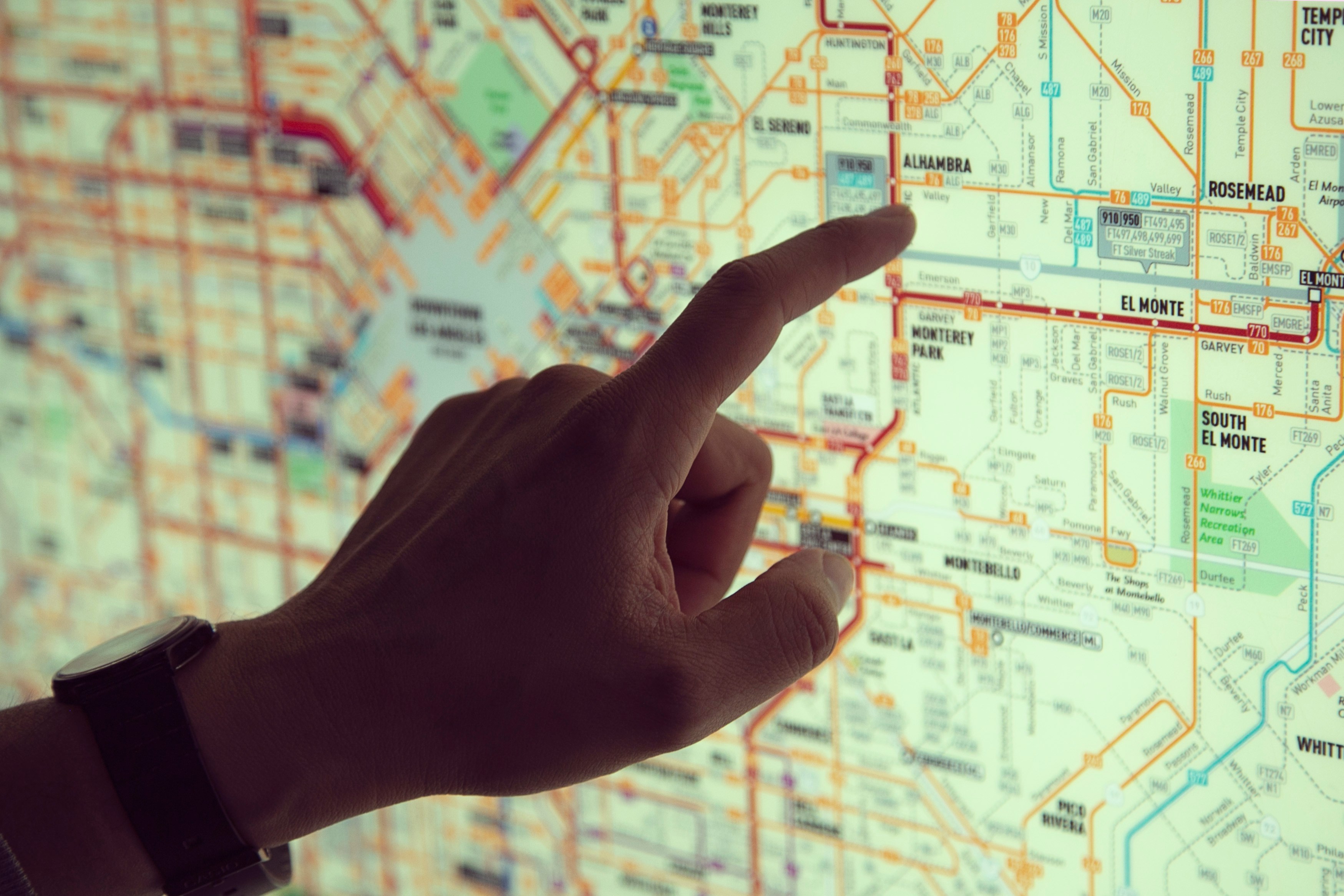
Ask most organizations why they invest in wayfinding, and you'll get an efficiency answer: fewer people missing their train, fewer people wandering an aisle looking for oat milk, fewer support calls. That's real, and it matters. But it's not the whole reason wayfinding works, or fails.
In recent safety research we conducted for a major transit agency, riders consistently described feeling less safe in exactly the moments where wayfinding broke down; not when something bad actually happened, but when they simply couldn't tell what was going on around them. Construction that changed a familiar route without updated signage. A blind corner in a tunnel with no sightline. A platform where the usual path suddenly wasn't obvious. None of these are safety incidents in the traditional sense. But all of them measurably increased how unsafe people felt.
That's the part efficiency-focused wayfinding metrics miss. Riders told us, almost word for word, that clear signage and visible order don't just help them get somewhere, they signal that someone is paying attention. A well-marked platform edge, a sign that's kept current through a construction phase, an announcement that explains why a train has stopped: each one is a small piece of evidence that the environment is being managed, not just occupied. Take that evidence away, and people fill the gap with worry, even when nothing has gone wrong.
Why watching beats asking
Here's where research methodology becomes the whole story. It's tempting to think you can get at this through a satisfaction survey, or by having your team walk the space and imagine themselves as a rider. Neither gets you there. CSAT tells you that someone was dissatisfied, not where in the journey their sense of safety quietly eroded, or what they did about it. And "putting yourself in their shoes" has an honest limitation: you already know where you're going. There is a naturally built in bias. You're not carrying the bag, the stroller, the unfamiliarity, or the specific worry that shapes how a given rider reads the same hallway.
What changes the picture is going with people, in real time, as they move through the system. This means riding alongside them from the platform to their last-mile connection, rather than asking them to reconstruct it afterward from memory. Safety isn't always something people are consciously thinking about; it surfaces in the moment, prompted by the actual environment in front of them, and it's genuinely hard to recall or describe accurately once you're sitting across a table from a researcher an hour later.
Riding along also surfaces the workarounds people invent because the system doesn't fully solve the problem for them. These are the quiet adaptations that never show up in a survey because no one thinks to ask about them, and most riders don't think to mention them unprompted. People switch train cars mid-trip if something feels off. They scan for exits while still on the platform, before anything has happened. Some riders text a family member their location out of habit, not because anything is wrong, but because it's become their own private safety system. None of these behaviours indicate a rider who feels safe. They indicate a rider who has quietly built their own backup plan, because the environment didn't give them enough confidence to skip it. You only catch that by being there when it happens, watching what people really do, rather than asking what they think they'd do.
What good wayfinding signals to users
We saw a related pattern in a separate wayfinding study inside a major transit hub, where the question wasn't safety on paper, rather it was clarity and appeal of new signage. But the language riders used to describe good signage overlapped heavily with the language people use to describe feeling safe: predictable, easy to scan, consistent with what they already expected. Confusing wayfinding doesn't just slow people down. It puts them on alert.
This isn't unique to transit. In grocery and retail environments, we've heard a version of the same thing: shoppers read a store's physical order, such as consistent layout, sightlines down the aisle, signage that matches what's actually on the shelf, as evidence of whether a retailer can be trusted, not just whether it's convenient. A store that feels orderly and easy to navigate reads as more affordable and more trustworthy, independent of what's on the price tag. Older locations that have accumulated their own idiosyncratic layout over time face a different challenge than new builds designed with consistency in mind from day one, but the underlying need is the same: people are constantly, if unconsciously, scanning their environment for signs that it's under control.
That reframes what wayfinding research should be measuring. It's not enough to test whether people can find their way. You must test whether they feel confident while doing it, and where that confidence breaks down under real conditions: during a disruption, at night, in an unfamiliar station, in an older store layout that doesn't match the new one across town. Those are different questions with different answers, and averaging them into a single "clarity" score hides exactly the moments that matter most.
The organizations getting this right treat wayfinding as safety infrastructure, budgeted and researched with the same seriousness as lighting or staffing, not as a signage refresh that happens once and gets left alone. Because the real cost of poor wayfinding isn't a few extra minutes of confusion. It's a rider or a shopper who quietly decided the environment couldn't be trusted and didn't tell anyone why.
Key takeaways
- Wayfinding's job isn't just efficiency. Confusing environments measurably increase how unsafe people feel, even when nothing has gone wrong.
- Clear, current signage and visible order function as evidence that a space is being actively managed; remove that evidence and people fill the gap with worry and anxiety.
- Surveys and empathy walk-throughs can't surface this. You need to observe people moving through the real environment, in real time, to catch the workarounds they've invented because the system didn't give them enough confidence to skip them.
- The same psychology shows up in retail: consistent, orderly, easy-to-navigate environments read as more trustworthy and more affordable, independent of what's on the price tag.
- Wayfinding should be researched and budgeted as safety infrastructure. It should be ongoing, not a one-time signage refresh, because the real cost of getting it wrong is silent attrition, not complaints.
We help transportation and retail brands understand not just whether people can navigate their environments, but whether they feel confident and safe doing it. Let's talk about your next study.
Related notes.

Beyond the Liquid: How Experience Became the New Premium in Spirits
How experience, not just liquid, is winning premium in spirits.
Flat Isn't Failure: Rethinking What "Resilience" Looks Like in Restaurants
Why flat sales might be the strongest sign of brand health.

Trust Anchors: Why the Empty Aisle Can Still Win
Why physical stores remain the ultimate trust anchor for shoppers.